
Walking Dog at Night: Safety & Visibility Guide
Walking your dog safely in the dark? Discover top tips and gear for visibility, from LED collars to reflective vests.

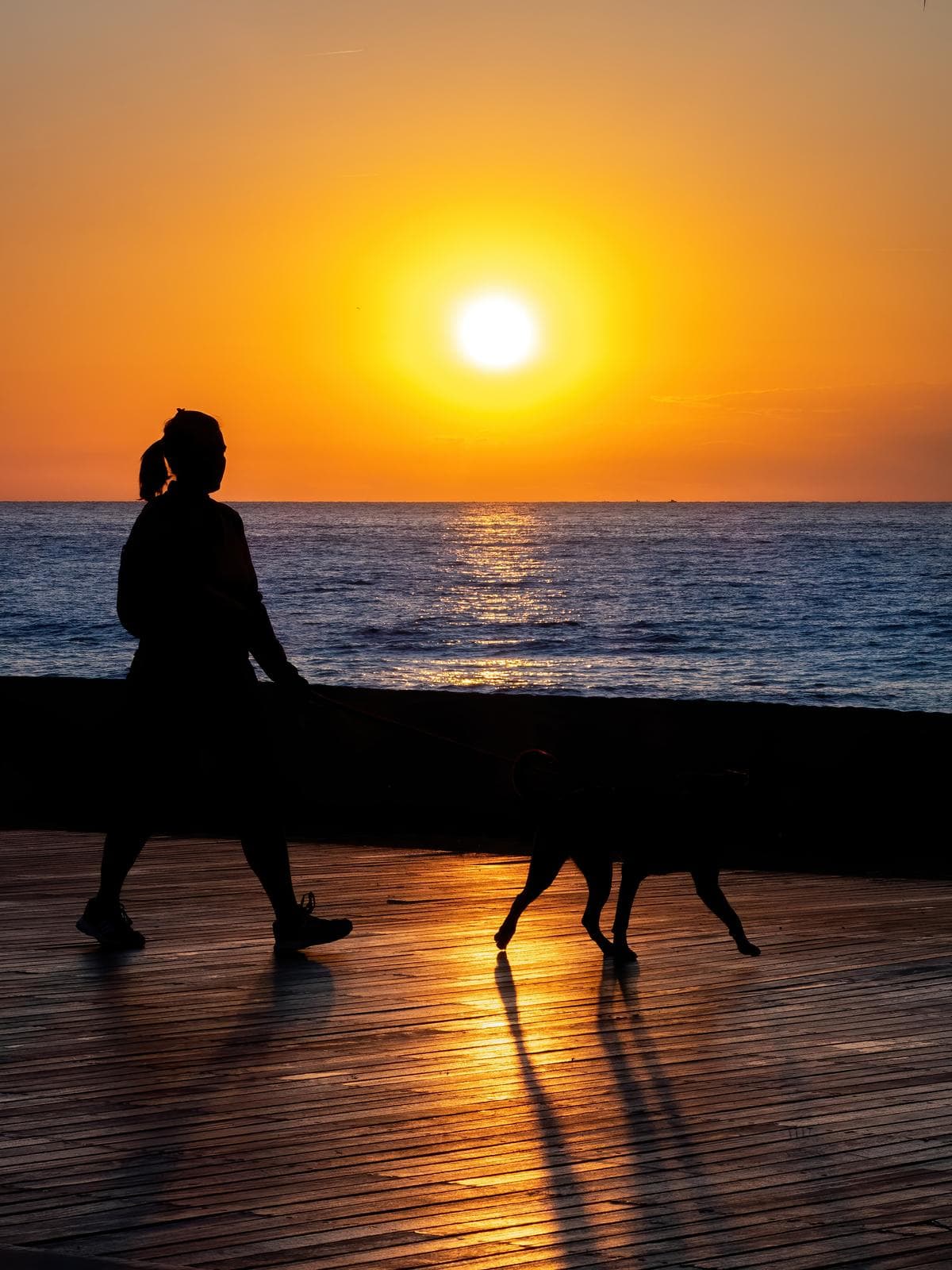
The clocks have changed, the leaves are falling, and before you know it, it's pitch black by 5 PM. For many dog owners, this means the cozy long evening walk suddenly turns into a journey through darkness. And early birds aren't spared either: the morning round happens before the sun even thinks about rising.
Walking in the dark certainly has its charm. The world is quieter, the air is crisp, and you encounter fewer people. But let's be honest: it also brings challenges and risks. You can't see where you're walking, your dog startles more easily at unexpected sounds, and—most importantly—drivers and cyclists often see you only at the very last moment.
As Lead Content Strategist at Dogmaps and a fervent dog lover, I know how crucial it is to head out well-prepared. In this ultimate guide, we dive deep into the world of safety and visibility. We look not only at the best gadgets but also at the psychology of your dog in the dark and how you, as the owner, stay in control. Because a safe walk is a relaxed walk!
Why Walking in the Dark is Risky
You might think: "I'm just walking on the sidewalk, what could happen?" Yet many people underestimate the dangers of poor visibility. Countless accidents involving pedestrians with dogs happen every year simply because they weren't seen.
The Invisible Pedestrian
In the dark, depth perception for drivers decreases drastically. A pedestrian in dark clothing is often only visible at a distance of 20 to 30 meters. Driving at 50 km/h? Then the braking distance is quickly longer than that. If your dog unexpectedly steps onto the road to sniff a tree, an accident can happen in a split second.
Cyclists Without Lights
In many cities, cyclists are a notorious hazard. The rise of fast e-bikes makes sidewalk and bike path traffic unpredictable. Many cyclists have poor lighting and can't hear you coming due to wind or earbuds. An unlit dog on a long, invisible leash is a recipe for a collision—for the cyclist and your dog.
Changed Dog Behavior
Dogs see better in twilight than we do, but in complete darkness, they also rely on other senses. Shadows move differently, trash cans suddenly look like monsters, and a rustling leaf can trigger a startle response. Dogs that are very relaxed during the day can become reactive, anxious, or watchful in the dark. This requires a different kind of guidance.
Wildlife Wakes Up
Do you live near a forest or park? Twilight and darkness are when deer, boars, and foxes become active. Scent trails are fresher and stronger, which can trigger your dog's hunting instinct. A dog chasing wildlife in the dark is a nightmare: you can't see where they're going, and they might cross a road in their blind drive.
The Science of Visibility: Active vs. Passive
To be safe, you need to understand how visibility works. We distinguish two types: active lighting and passive reflection.
Active lighting is anything that emits light itself, like LED lights. This ensures you are seen, even if no light shines on you. It also helps you see where your dog is in a dark park.
Passive reflection (retro-reflection) only works if a light source shines on it, like car headlights. The material bounces the light directly back to the source. This is often brighter and visible from a greater distance than a small LED light, but it doesn't work in a pitch-black forest without oncoming traffic.
The golden rule? Combine both! Ensure a light so you are always visible, and reflective material for that extra pop in traffic. Also, consider your dog's coat: a black Labrador disappears completely in the night, while a white Shepherd still catches some residual light. For dark dogs, lighting is even more crucial.
The Ultimate Gear for Your Dog
There's so much on the market today that it's hard to choose. What do you really need? Here are our favorites, tested in practice.
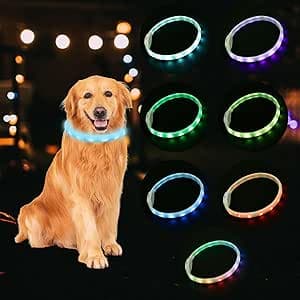
1. The Light-Up Collar
The foundation of any night gear. A good LED collar ensures 360-degree visibility. Pay attention to quality: cheap versions often break after two charges or are poorly visible through thick fur.
The USB LED Collar we recommend is robust, rain-resistant, and bright enough to shine through longer fur. You can easily cut it to size and charge it via USB, so no hassle with button batteries.
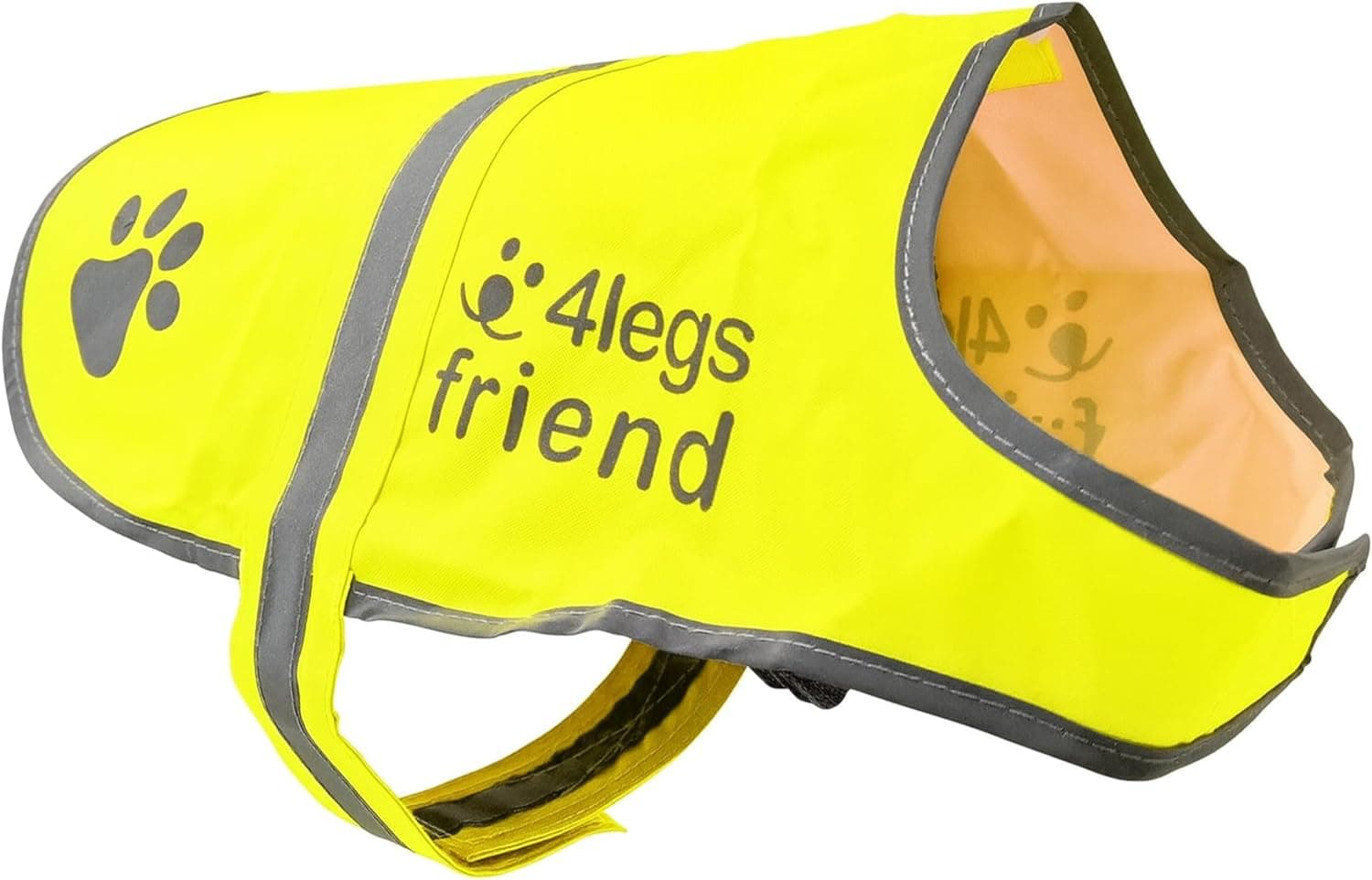
2. The Reflective Safety Vest
Do you have a dog with a thick ruff, like a Leonberger or a Chow Chow? Then a collar often disappears in the fur. A reflective vest is the solution. It covers a larger surface area of the body, making drivers see instantly: "Hey, there's an animal walking there."
Moreover, such a vest (especially the neon yellow ones) also protects during foggy weather during the day. The Reflective Dog Vest is lightweight, doesn't restrict movement, and is easy to put on and take off.
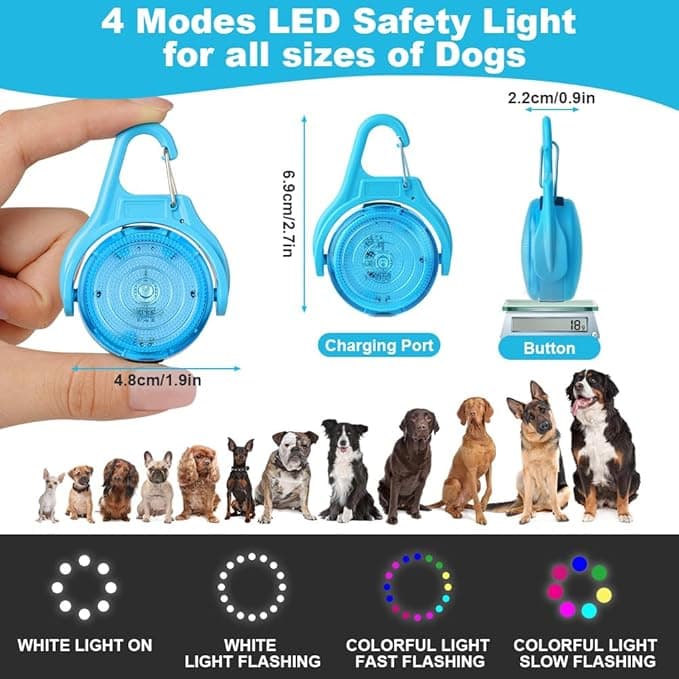
3. Flexible LED Lights (Clip-on)
Sometimes you just want to quickly go outside without bundling up your dog. A small, bright light that you clip onto the harness or leash is ideal. These Clip-on LED Safety Lights are versatile. Tip: hang one on your own jacket zipper or on the loop of the dog leash so people see where the line runs.
4. The Leash
Don't forget the leash! A reflective leash or one with built-in lighting prevents cyclists from trying to ride between you and your dog—a classic and painful accident.
Gear for the Owner: Don't Forget Yourself!
Your dog is now a walking Christmas tree, but what about you? You are the one who has to make decisions and keep an overview.
- The Headlamp: An absolute gamechanger for dog owners. With a flashlight in your hand, you can't reward properly or clean up poop (try doing that in the dark!). A headlamp always shines where you look and keeps your hands free. Choose one with red light to preserve your night vision.
- Reflective Clothing: Don't wear a black jacket without reflection. A simple safety vest over your jacket or a reflective armband makes a world of difference.
- Sturdy Shoes: In the dark, you don't see that loose paving stone or that slippery mud puddle. Good hiking boots with tread prevent you from slipping if your dog suddenly pulls on the leash.
Behavior and Training in the Dark
Safety is more than just stuff; it's also about behavior. How do you guide your dog safely through the darkness?
Scan the Environment
Be proactive. You are the eyes of the team. Constantly scan the environment for headlights, bike lights, or other dogs. See something coming? Call your dog to you or have them sit on the side of the road until the danger has passed.
The "Watch Me" Command
This is worth gold. If your dog sees something scary in the dark (that trash can looking like a monster), they might bark or lunge. By training the command "watch me," you shift their focus to you. Reward heavily when they make eye contact. This teaches them: "If I see something exciting, I look at my owner because that gets me a treat."
Leash Handling
Keep your dog closer to you in the dark. An 8-meter retractable leash is unwise in the dark because you have no control if something suddenly happens. Use a fixed leash of 1.5 to 2 meters so you have direct contact.
Avoid Busy Roads
Seek out quiet areas. Residential neighborhoods with good street lighting are safer than dark country roads where cars drive fast. If you must walk along a busy road, always walk against traffic. This way, you see the danger coming and can intervene.
Fun Activities in the Dark
Walking in the dark doesn't have to be a boring obligation. You can make it fun! Since visual stimuli are reduced, you can focus on the nose.
- Scent Games: Scatter some kibble in the grass (use your light!) and let your dog find them. This is mentally tiring and very satisfying.
- Hide and Seek: Go out in pairs. One holds the dog, the other hides behind a tree (with a light on for safety). Call the dog and let them search. Fun guaranteed!
Conclusion
The dark season lasts a long time, so you might as well make the best of it. With the right preparation, you turn that tense night walk into a safe and enjoyable ritual. Ensure you are both visible like a beacon in the night, adjust your pace, and stay alert.
Invest in that good LED collar and that reflective vest. It's a small expense that makes a world of difference for your safety. And who knows, maybe you'll secretly start appreciating those quiet, mysterious night walks.
Do you have an ultimate tip for walking in the dark? Share it with us! And don't forget: Stay safe, shine bright!
Happy walking,
Mascha from Dogmaps
Four times a year
The Dogmaps newsletter in your inbox
A short welcome series followed by four practical emails a year with tips, locations, and relevant offers.

 Mascha
 Marijke